Why Concrete Fails Faster at Pikes Peak Elevations: Freeze-Thaw, Grade, and What to Do About It
If you've lived in both Denver and somewhere up the Ute Pass corridor, you already know the two places don't feel like the same climate, even though they're only an hour apart on I-25 and Highway 24. What you may not know is that the difference is doing real, measurable damage to your driveway, patio, and sidewalks — and doing it faster than it does in the flatlands. This guide walks through exactly why, town by town, and what it means for how you should think about repairing and protecting concrete anywhere from Fountain up to Cripple Creek.
Two forces are at work, and they compound each other. The first is elevation: thinner air at altitude changes how fast temperatures swing and how concrete freezes and thaws. The second is grade: this region's foothills and mountain-corridor terrain puts driveways, patios, and walkways on real slopes instead of the flat pads common in Denver-metro subdivisions, which changes where water goes and where damage concentrates. Understanding both is the difference between a repair that lasts and one that fails again by the following winter.
The Physics of Freeze-Thaw at Altitude
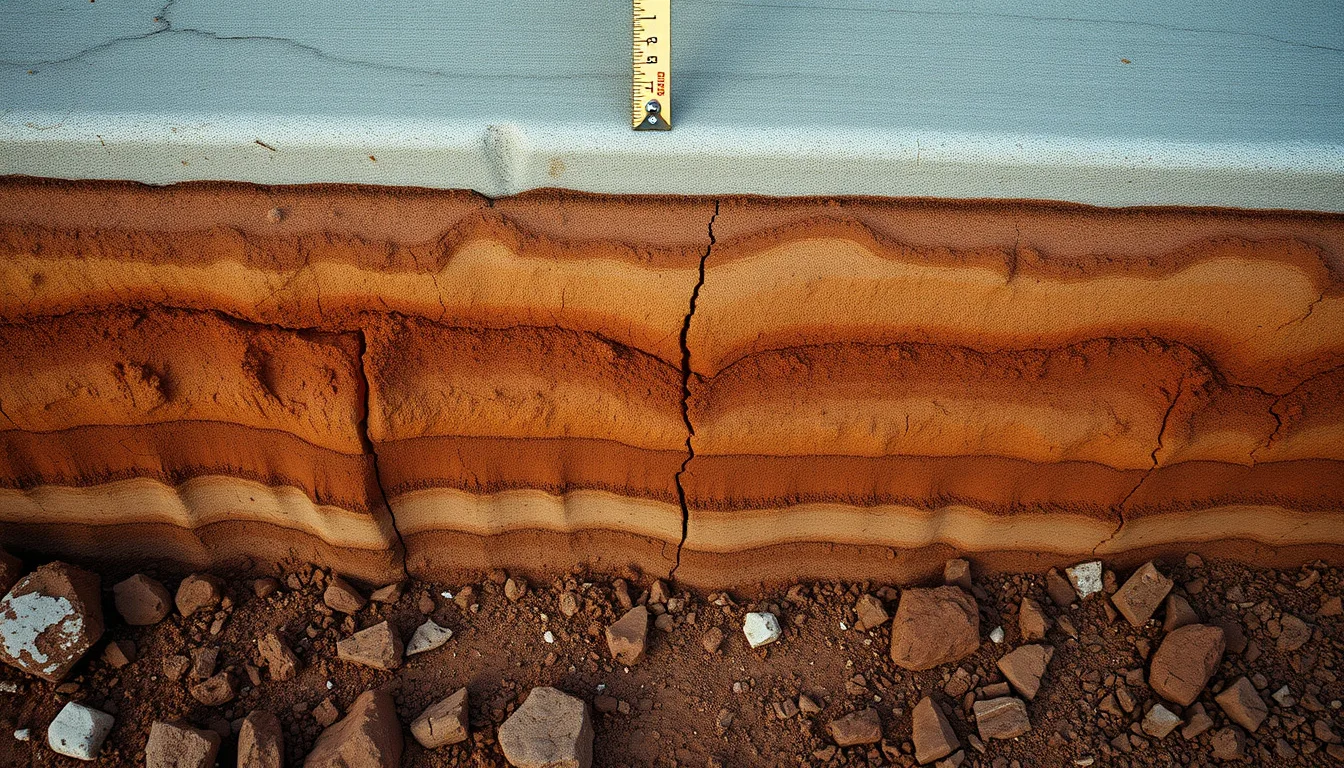
Concrete is full of microscopic pores, and those pores hold water — from rain, snowmelt, irrigation overspray, or just ambient humidity. When that trapped water freezes, it expands by roughly 9% in volume. If the concrete around it can't accommodate that expansion, something has to give, and what gives is the concrete itself: a hairline crack, a widened joint, a flaked and scaled surface. Do that once and it's barely noticeable. Do it dozens of times over a winter, in the same micro-cracks, each cycle prying them open a little further, and you get the alligatored, spalled, heaved concrete that's common across this region by the time a driveway hits 10 or 15 years old.
The Denver-metro area is already a documented freeze-thaw hot spot by national standards — commonly cited around 149 freeze-thaw cycles per year, well above cities like Chicago or Minneapolis that get bitterly cold but tend to freeze once in November and stay frozen until March. Denver's Front Range climate does the opposite: cold, clear nights followed by more than 300 days of annual sunshine mean the ground and the concrete on top of it are constantly bouncing across the 32°F line instead of settling below it for the season.
Now take that same mechanism and add elevation. As you climb from Denver's mile-high 5,280 feet up into the Pikes Peak region's higher towns, the air gets thinner, and thinner air holds less heat and transfers it faster. That has two consequences that matter directly for concrete:
- Faster day-to-night temperature swings. At higher elevation, daytime solar warming and nighttime radiative cooling both happen more abruptly because there's less atmosphere to buffer the exchange. A slab that warms into the 40s under midday sun can drop back below freezing within a few hours after sunset — a full freeze-thaw crossing in a single day, something that happens less predictably at lower elevations where the air mass holds more residual warmth overnight.
- Intense high-altitude sun that thaws snow and ice even when the air stays below freezing. Solar radiation is stronger at altitude because there's less atmosphere to filter it. On a clear January day in Woodland Park or Cripple Creek, direct sun can melt the surface of snow and ice sitting on a driveway even while the thermometer reads 25°F. That meltwater runs into cracks and joints, and when the sun goes down, it refreezes — a melt-refreeze cycle driven by radiation rather than air temperature alone.
Put those two effects together and the honest, defensible conclusion is this: the higher-elevation towns in the Pikes Peak region see conservatively more freeze-thaw crossings per winter than the Denver-metro baseline — meaningfully more, driven by the combination of sharper daily temperature swings and radiation-driven melt-refreeze events that Denver's lower elevation doesn't produce at the same rate. We're not going to hand you a fabricated cycle count for your specific address — nobody has instrumented every driveway in Teller and El Paso counties to produce one — but the mechanism is well understood and it points in one direction: more elevation generally means more freeze-thaw stress on concrete, all else being equal.
Elevation Across the Pikes Peak Region — It's Not All the Same
One of the most common mistakes homeowners make is treating "the mountains" as a single climate. It isn't. Elevation varies enormously across this service area, and so does the freeze-thaw exposure your concrete is actually under:
- Fountain — approximately 5,538 ft. This is actually close to Denver's elevation and lower than most of the rest of the region. Concrete here behaves more like Denver-metro concrete freeze-thaw-wise; the bigger story in Fountain tends to be soil and drainage rather than extreme elevation effects.
- Colorado Springs — approximately 6,035 ft. A meaningful step up from Denver, enough to start seeing faster swings and more radiation-driven melt-refreeze on south-facing driveways and walks.
- Manitou Springs — approximately 6,320 ft. Similar elevation story to Colorado Springs, compounded by the fact that Manitou sits in a narrow canyon with steep lots — more on that below.
- Monument — approximately 7,000 ft. Solidly into the range where day-to-night swings become a bigger factor, especially on the exposed, wind-scoured stretches along the I-25 corridor.
- Palmer Lake — approximately 7,235 ft. Comparable to Monument, with similar exposure patterns.
- Cascade — approximately 7,300 ft. Tucked into Ute Pass terrain, meaning both elevation exposure and steep-grade drainage are in play at once.
- Green Mountain Falls — approximately 7,800 ft. High enough that freeze-thaw crossings are a genuine year-round winter concern, not just a shoulder-season issue.
- Woodland Park — approximately 8,465 ft. One of the highest-elevation towns in the service area; expect more aggressive freeze-thaw exposure and correspondingly more attention needed on sealing, joint maintenance, and drainage.
- Divide — approximately 8,900 ft. Among the highest points in the region; concrete here is doing the most freeze-thaw work of anywhere on this list.
- Cripple Creek — approximately 9,494 ft. The highest town in the service area. At this elevation, expect the most frequent melt-refreeze cycling and the shortest window each year when concrete isn't dealing with some form of freeze-thaw stress.
The takeaway isn't that every single property in the region is worse off than Denver — Fountain is a clear exception. It's that elevation is a real, town-specific variable, and a driveway in Divide or Cripple Creek is simply doing more freeze-thaw work every winter than an identical driveway in Fountain or Denver, even if both were poured by the same crew with the same mix design on the same day.
How Steep Grades Change Where and How Damage Shows Up
Elevation explains how much freeze-thaw stress a slab sees. Grade explains where the resulting damage actually shows up — and in the Pikes Peak region, grade is doing at least as much work as elevation.
Denver-metro subdivisions are, for the most part, built on flat or gently rolling ground. A typical Front Range driveway pitches maybe an inch or two over its length, just enough for positive drainage. That's not the terrain up here. Manitou Springs, Woodland Park, Cascade, and Green Mountain Falls in particular are built into real foothills and canyon terrain, and it shows in the flatwork: driveways that climb a full story from street to garage, patios cut into a hillside and held up by retaining walls, terraced yards connected by concrete steps and landings.
That terrain changes the water story completely. On a flat Denver slab, rain and snowmelt spread out and drain in more or less every direction, so freeze-thaw damage tends to show up in a scattered, fairly random pattern across the whole surface. On a graded slab, water does something very different: it sheets downhill and concentrates. A few consistent things happen as a result:
- Damage clusters at predictable low points. Wherever a sloped driveway or walkway has a dip, a transition, or meets a flatter landing, that's where water collects, sits, and refreezes overnight. You'll often see the worst scaling, spalling, and joint failure at the bottom of a slope or at a mid-slab low spot — not evenly distributed across the whole surface.
- Flatter mid-sections hold water longer than steep sections. Counterintuitively, the steepest part of a driveway is sometimes in better shape than a flatter landing partway down, because water sheds off the steep section fast while it lingers on the flatter stretch long enough to freeze and thaw repeatedly.
- Steep sections see their own damage pattern instead. Fast-moving water on a steep grade erodes surface paste and aggregate over time (surface wear and light scaling), and steep sections are also where de-icing product tends to get applied heaviest, because they're the part of the driveway most likely to ice over and become a slip or traction hazard.
- Retaining walls and terracing introduce joints and pressure points that flat lots don't have. Every wall-to-slab junction, every terrace step, is a place where water can get behind the concrete, where backfill soil pressure is doing extra work, and where a crack has an obvious place to start.
- Single-channel drainage concentrates stress instead of spreading it. A flat lot often drains diffusely across a yard. A sloped mountain lot frequently funnels all of its water through one channel, swale, or culvert — which means that one feature is taking the brunt of every storm and every melt cycle, all season, every season.
This is exactly why two driveways that look similar from the street — same age, same contractor, same concrete mix — can develop completely different damage patterns if one is flat and one is graded. The graded one isn't necessarily worse off overall, but its damage will be concentrated, predictable once you know what to look for, and driven as much by where the water goes as by how cold it gets.
What This Means for Repair Method
Diagnosing concrete damage in this region without accounting for both elevation and grade is how repairs end up failing again within a year or two. A few practical implications:
- A crack repair on a graded slab has to account for where the water is actually coming from. Injecting or sealing a crack without addressing the low point or channel that's feeding it water year after year treats the symptom, not the cause — the same failure mode we see with expansive soil, just triggered by drainage instead.
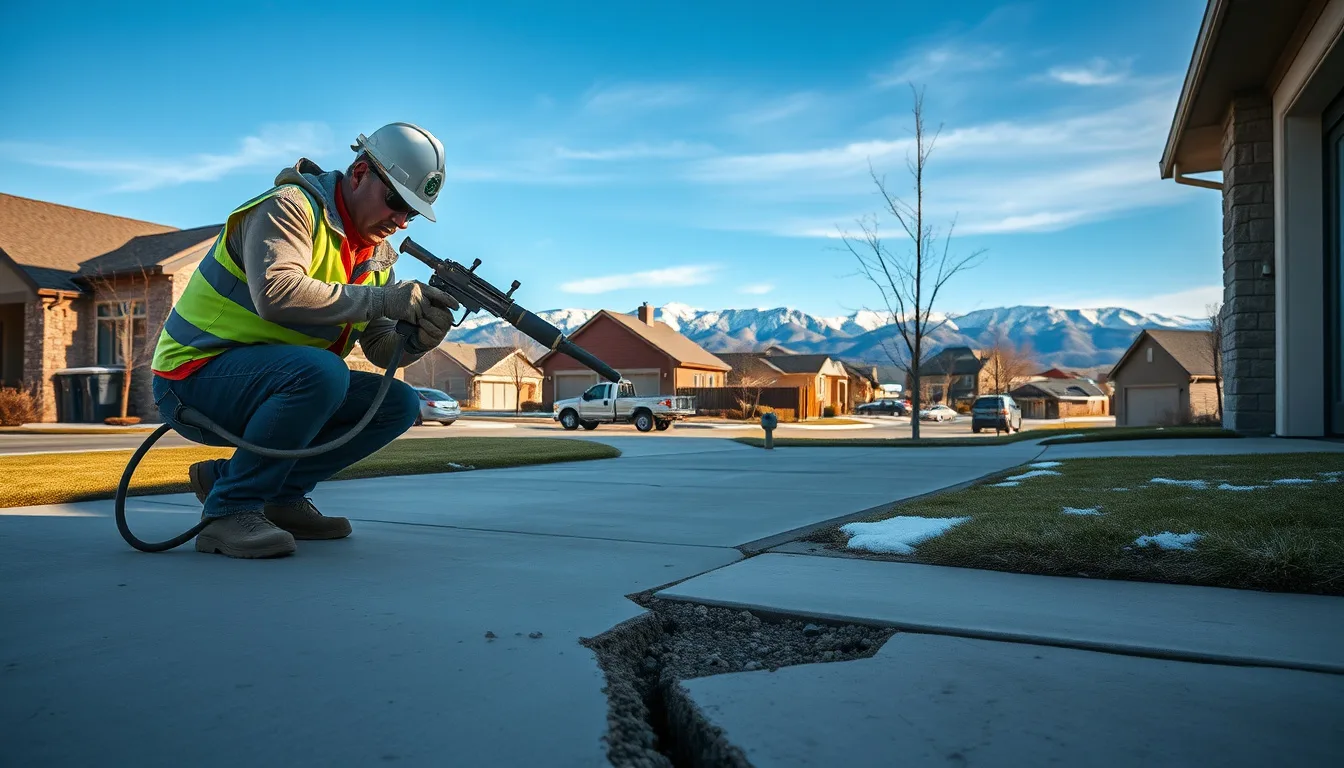
- Lifting and leveling on a sloped slab has to preserve the intended slope, not flatten it. Mudjacking or foam injection under a graded driveway needs to restore the original grade precisely — over-lifting or under-lifting even slightly can redirect water toward the house, a garage door, or a neighboring low point that didn't have a drainage problem before.
- Retaining wall and terrace joints often need attention alongside the flatwork itself. A crack showing up right at a wall-to-slab junction is rarely just a concrete problem — it usually needs the drainage behind the wall inspected too.
- Higher-elevation towns benefit more from proactive sealing. Because towns like Woodland Park, Divide, and Cripple Creek are doing more freeze-thaw cycles per winter, a quality penetrating sealer that keeps water out of the pore structure in the first place earns its cost back faster than it would in Fountain or Denver.
- Diagnosis takes longer on graded, terraced properties, even when the repair itself is standard. Tracing where water is actually moving on a hillside lot before recommending a fix is real inspection work — it isn't a corner that should get skipped to save time.
Prevention: What Actually Helps at Elevation and on Grade
- Seal exposed concrete every 2-3 years, sooner at higher elevations. A quality penetrating sealer reduces how much water gets into the pore structure in the first place, which directly reduces how much freeze-thaw expansion can happen inside the slab.
- Keep control joints clean and properly filled. Joints are designed to be the weak point that controls where cracking happens — but only if they're actually doing their job of shedding water instead of holding it.
- Address drainage at the source, not just at the crack. On a graded lot, that usually means making sure gutters, swales, and channels are actually carrying water away from the low points on your flatwork instead of dumping it there.
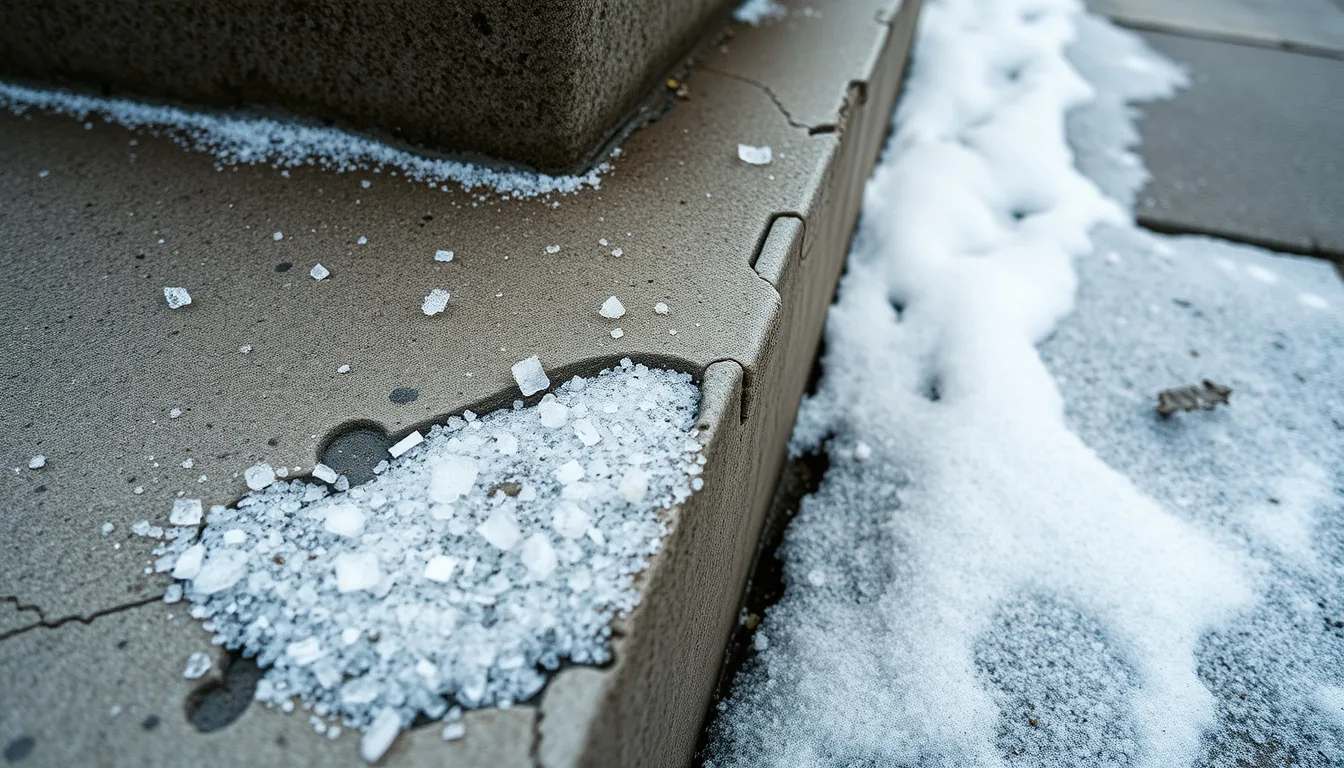
- Match de-icing product and application to the slope, not just the season. Steep sections need traction help in winter, but heavy, repeated de-icing salt application is its own damage mechanism — see our companion guide on de-icing salt damage for the specifics.
- Get uneven or heaved sections of a graded driveway inspected before they get worse. A slab that's started to tilt out of its original grade is actively making its own drainage problem worse every season it's left alone.
Frequently Asked Questions
Does higher elevation really cause more concrete damage, or is that a myth?
It's grounded in real physics, not a myth, but it's also not a precise, one-size-fits-all number. Thinner air at higher elevation means faster day-to-night temperature swings and more intense solar radiation, both of which drive more frequent freeze-thaw and melt-refreeze cycling than the Denver-metro baseline sees. The effect is real and meaningfully more pronounced in towns like Woodland Park, Divide, and Cripple Creek than it is in Fountain, which sits at an elevation similar to Denver. We won't quote you a fake precise cycle count for your address, because no one has verified one — but the underlying mechanism is well documented.
Why does my sloped driveway crack in the same spot every year?
That's the signature of grade-driven damage. On a sloped or terraced driveway, water doesn't spread out evenly the way it does on a flat Denver-style slab — it runs downhill and concentrates at low points, transitions, and drainage channels. Whatever spot is collecting and holding water overnight is the spot doing the most freeze-thaw cycling, so it's also the spot most likely to crack, scale, or spall first and worst.
Is concrete in Woodland Park or Divide going to fail faster than concrete in Colorado Springs or Fountain?
Not automatically, but the elevation exposure is genuinely higher. Woodland Park (about 8,465 ft) and Divide (about 8,900 ft) sit meaningfully higher than Colorado Springs (about 6,035 ft) and Fountain (about 5,538 ft), which means more freeze-thaw crossings per winter, all else being equal. Mix design, installation quality, sealing maintenance, and drainage still matter enormously and can offset a lot of that extra exposure — but a well-maintained slab in Divide is still working harder every winter than an identical slab in Fountain.
Do retaining walls and terraced patios need different repair than flat concrete?
Often, yes. Wall-to-slab junctions and terrace steps introduce extra joints, backfill pressure, and drainage paths that flat concrete doesn't have to deal with. A crack at a wall junction frequently traces back to water or soil movement behind the wall rather than being a simple surface crack, so those areas usually need a broader inspection than just patching the visible crack.
Should I use more de-icing salt on steep sections for safety?
Use what you need for safety, but understand the tradeoff: steep sections already tend to get heavier de-icing applications because they ice over first and pose the biggest slip risk, and that heavier application is itself a documented cause of surface scaling and eventual spalling. Magnesium chloride in particular is considerably more damaging to concrete than calcium chloride. Where possible, favor sand or a less-corrosive product on concrete surfaces, and consider a quality sealer to reduce how much of any de-icing chemical actually penetrates the slab.
How do I know if my crack is from elevation freeze-thaw, grade/drainage, or clay soil movement?
In practice it's often more than one cause working together, which is exactly why a phone-quote guess is a bad way to price a repair. Freeze-thaw damage tends to look like surface scaling, popped aggregate, and cracks that follow joints. Grade-driven damage tends to cluster at predictable low points and drainage channels. Expansive clay damage tends to show up as wider structural cracks and slab heave, often more pronounced near the foundation. A proper on-site inspection looks at all three before recommending a repair method, because using the wrong fix for the actual cause is the single biggest reason repairs fail again within a year or two.
Get an Inspection That Actually Accounts for Your Elevation and Your Grade
Concrete damage in the Pikes Peak region isn't generic, and it shouldn't get a generic repair. Whether you're dealing with scaling on a Woodland Park driveway that's fighting more freeze-thaw cycles than it would at sea level, or a Manitou Springs patio where water concentrates at one low point every winter, the right fix starts with understanding both how high you are and how steep your lot is. We inspect concrete across the full region — Colorado Springs, Manitou Springs, Woodland Park, Cascade, Green Mountain Falls, Fountain, Monument, Palmer Lake, Divide, and Cripple Creek — and we look at elevation and grade together before we ever recommend a repair method. Request a free on-site inspection through our online form, and get a repair plan built around the terrain your concrete actually sits on, not a generic estimate that ignores it.
Ready for a real number?
Free inspections across the Pikes Peak region — measured on site, fixed price before any drilling starts.