Expansive Clay Soil on Steep Pikes Peak Lots: Why Driveways and Patios Crack and Heave
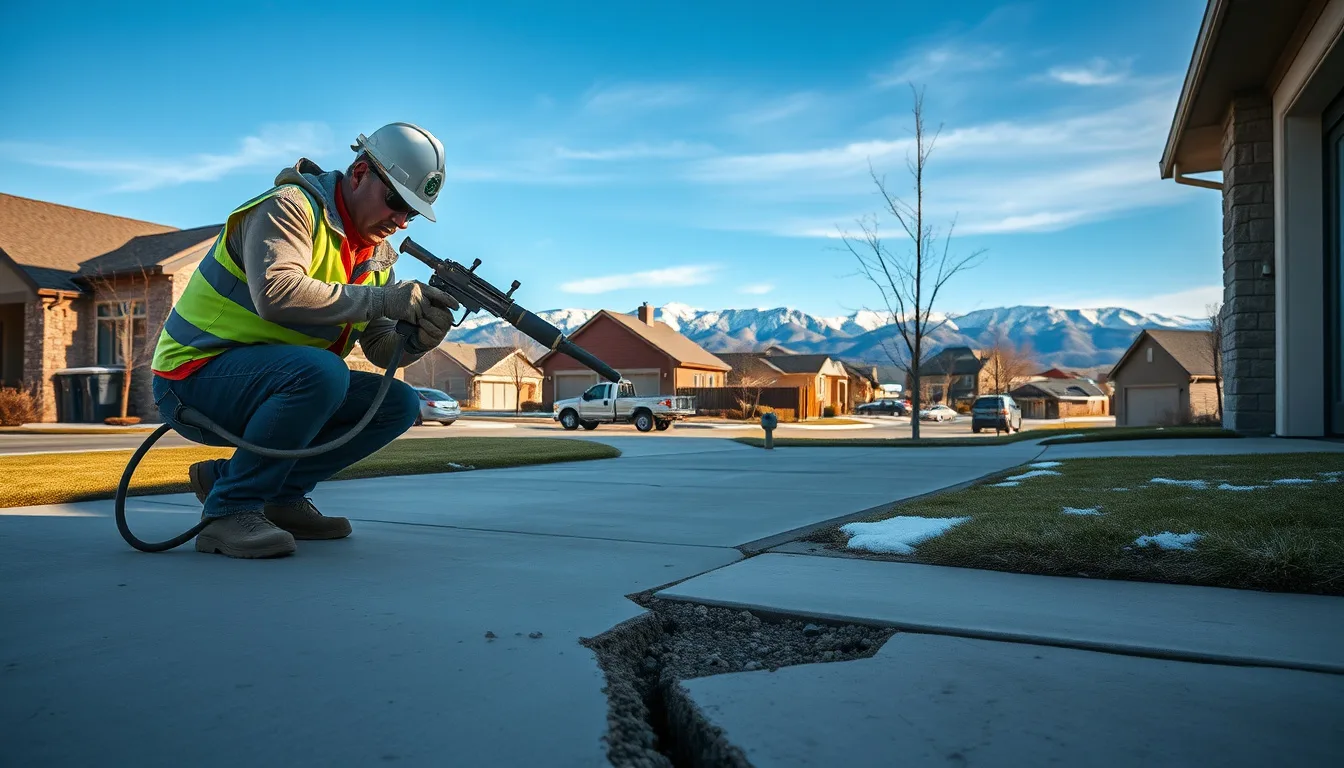
Homeowners across the Pikes Peak region tend to notice the same pattern eventually: the house feels solid, but the driveway, patio, or front walk has developed a crack that keeps getting wider, or one edge of a slab has visibly lifted or dropped compared to the rest. That mismatch — solid house, moving flatwork — isn't a coincidence, and it isn't a sign of bad concrete. It's usually the signature of expansive clay soil underneath, and on the steep, terraced lots common from Manitou Springs to Woodland Park, that soil movement shows up in very specific, predictable places.
The Clay Underneath This Region
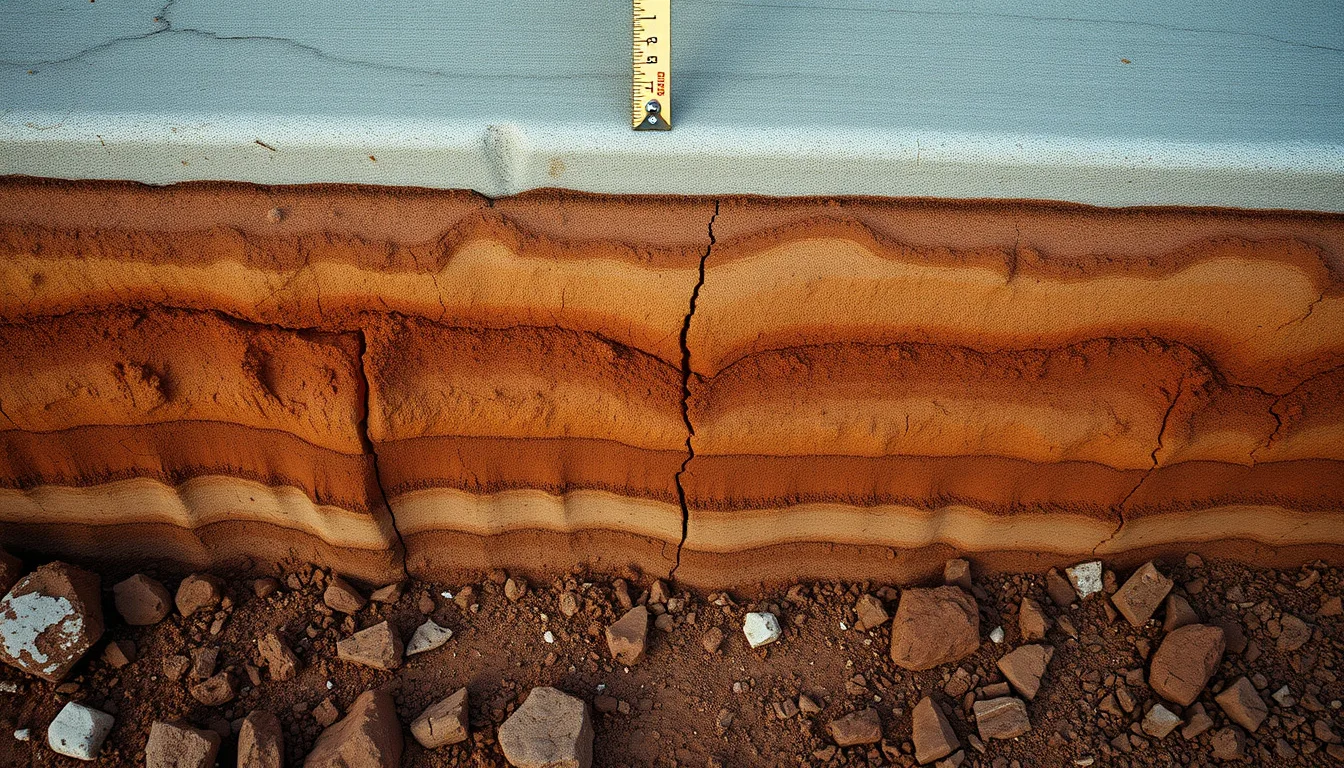
Much of the Pikes Peak region sits on or near Pierre Shale and other bentonite-bearing claystone formations. The mineral doing the work inside that shale is montmorillonite, a clay that has an unusual property: it swells significantly when it absorbs water and shrinks again as it dries out. This isn't a one-time settling event like loose fill dirt compacting under a new structure — it's a seasonal cycle that repeats year after year, tracking moisture in the ground.
Documented seasonal ground movement in affected Pierre Shale and bentonite-clay areas along the Front Range and into the foothills runs roughly 2 to 6 inches between wet and dry conditions. That's enormous for something as rigid as a concrete slab. A driveway or patio poured flat and level in a dry fall can be sitting on ground that's pushed up several inches by the following spring, then drops back down again as summer dries the soil out. Do that every year for a decade and it's easy to see why cracks widen, joints separate, and slab edges end up out of level.
This is also why houses in this region are so often built on drilled piers that extend down to stable bedrock, well below the depth where seasonal moisture swings reach — but driveways, patios, sidewalks, and detached slabs are not. It would be prohibitively expensive to pier every square foot of flatwork on a property, so that concrete sits directly on the moving clay while the house above its piers stays put. The result is exactly the pattern homeowners notice: a house with no visible foundation problems next to a driveway that's cracking and heaving.
How Steep Grade Changes the Pattern
On a flat lot, expansive clay movement tends to show up as fairly generalized heaving and cracking across a slab — real damage, but distributed somewhat evenly. The Pikes Peak region complicates that picture because so much of it isn't flat. Manitou Springs, Woodland Park, and Cascade in particular are built into canyon and foothill terrain, where driveways climb real elevation from street to garage, patios are cut into hillsides, and retaining walls and terraces are standard features rather than exceptions.
Steep terrain changes expansive clay's effects in a few specific ways:
- Water concentrates instead of spreading out. On a slope, rain and snowmelt don't soak in evenly — they run to the low points, swales, and channels. Wherever water concentrates, the clay underneath is getting wetter and swelling more than clay elsewhere on the same lot, which means movement (and the cracking that follows) is more severe at those specific spots.
- Retaining walls take on soil pressure that flat lots never generate. A retaining wall holding back a terraced section is fighting expansive soil pressure directly, not just gravity. As the clay behind the wall swells seasonally, it pushes outward on the wall, and that pressure transfers into whatever concrete is tied to or sits near the wall — patios, steps, landings.
- Terraced slabs move independently of each other. A lot broken into multiple flat sections connected by steps or short retaining walls means each terrace is essentially its own island sitting on its own patch of clay. One terrace can heave while the one next to it stays put, which is exactly what opens up cracks and gaps at the transitions between them.
- Cut-and-fill sections behave differently from undisturbed ground. Building a driveway or patio into a hillside almost always means cutting into the slope on the uphill side and filling on the downhill side. Fill soil compacts and settles differently than the undisturbed clay it's sitting next to, so a slab that crosses a cut-fill line is bridging two sections of ground that are moving at different rates and in different directions.
- Drainage failures do more damage on a slope. A downspout or grade that dumps water against a hillside patio or into a single channel behind a retaining wall is feeding concentrated moisture directly into the clay right where a wall or terrace edge is least able to tolerate the extra swelling pressure.
The practical result: on a steep, terraced Pikes Peak lot, expansive clay damage rarely shows up as one uniform problem across the whole property. It shows up terrace by terrace, wall by wall, often worst right where drainage is concentrating water into the ground.
What This Means for Repair
Fixing a crack or lifting a heaved slab without accounting for the clay and the grade underneath it is one of the most common ways a repair fails again within a year or two. A few things matter for getting it right:
- Flexible repair material for active movement. A rigid epoxy fill next to soil that's still swelling and shrinking seasonally can crack again right next to the original repair. Cracks over active clay movement generally call for a flexible polyurethane sealant that can tolerate ongoing motion instead of fighting it.
- Lifting has to preserve the intended slope on graded flatwork. Mudjacking or foam injection under a sloped driveway or terraced patio needs to restore the original design grade precisely, not just bring the slab back to "flat" — over-correcting can send water toward a wall, a garage door, or a neighboring terrace that wasn't a problem before.
- Drainage behind retaining walls needs its own look. A crack or bulge at a wall-to-slab junction is rarely just a concrete issue. It usually calls for checking whether the wall has adequate weep holes or drain systems moving water out from behind it instead of letting it pool against the clay.
- Diagnosis on terraced lots takes longer, and that's appropriate. Tracing which terrace is moving, why, and whether a cut-fill line or a drainage channel is the real driver takes real inspection time on a hillside property — it's not a step that should be skipped to get to a faster number.
Prevention on Sloped, Clay-Heavy Lots
- Keep water moving away from slabs and walls, not into them. Downspouts, swales, and channels on a sloped lot should be directing water off the property or into a designed drainage system, not letting it pool against a patio edge or a retaining wall.
- Maintain consistent soil moisture near flatwork where practical. Extreme swings between soaked and bone-dry soil right next to a slab drive the most dramatic clay movement; consistent, moderate moisture (not flooding) reduces the swing.
- Watch terrace transitions and wall junctions first. These are the spots most likely to show the earliest signs of trouble on a graded, terraced lot — catching a small gap or crack there before it widens is far cheaper than waiting.
- Get uneven terraces or walls inspected early. A retaining wall that's started to lean, or a terrace that's visibly out of level with the one next to it, is worth a look before the movement accelerates.
Frequently Asked Questions
Why does my patio crack every year even though my house foundation is fine?
Because they're built differently. Most houses in this region sit on drilled piers that reach stable bedrock, well below where seasonal clay moisture swings occur. Patios, driveways, and walks almost never get piered — they sit directly on the clay, so they move with it season to season while the house above its piers doesn't.
How much does expansive clay actually move in this region?
Documented seasonal ground movement in affected Pierre Shale and bentonite-clay areas runs roughly 2 to 6 inches between wet and dry conditions. That's a real, repeating annual cycle, not a one-time settling event, which is why cracks from clay movement tend to keep widening year over year rather than stabilizing on their own.
Why does the damage on my terraced lot only show up on one section and not the others?
Terraced lots are effectively a series of independent slabs, each sitting on its own patch of ground that can be wetter, drier, cut, or filled differently than the terrace next to it. It's common for one terrace to heave or crack while an adjacent one stays stable, especially if drainage is concentrating water into the ground under just one section.
Does a retaining wall need to be part of the repair if my patio is cracking near it?
Often, yes. Wall-to-slab junctions carry extra soil pressure from clay swelling behind the wall, and a crack right at that junction frequently traces back to inadequate drainage behind the wall rather than being a simple concrete problem. A proper inspection checks the wall's drainage alongside the visible crack.
Should I use rigid epoxy to fix a crack caused by clay movement?
Usually not if the movement is still active. Rigid epoxy is the right call for a static, non-moving structural crack, but a crack that's opening and closing seasonally because of clay swelling underneath it generally needs a flexible polyurethane sealant that can tolerate ongoing motion without cracking again right next to the repair.
Can lifting and leveling fix a heaved section of my driveway permanently?
It can fix it well, but on the most active clay sites, a follow-up re-level after a severe wet-to-dry swing is sometimes needed because the clay itself keeps cycling. A fair contractor tells you upfront whether your property looks like one of those cases rather than selling a lift as a guaranteed permanent fix.
Get Your Slope and Soil Assessed Together
Expansive clay and steep grade rarely act alone in the Pikes Peak region — they combine, and the combination is exactly what produces the terrace-by-terrace, wall-by-wall damage pattern so many hillside properties see. We inspect driveways, patios, and retaining wall areas across Manitou Springs, Woodland Park, Cascade, Colorado Springs, and the rest of the region with both factors in mind. Request a free on-site inspection through our online form before you spend money on a repair that doesn't account for what's actually moving underneath it.
Ready for a real number?
Free inspections across the Pikes Peak region — measured on site, fixed price before any drilling starts.