Lifting & Leveling — Colorado Springs to Divide
Concrete Lifting & Leveling in the Pikes Peak Region — Raise Sunken and Heaved Slabs Without Losing Your Grade
Expansive clay swells and shrinks with the seasons, and steep terrain adds a second way slabs move. We lift and level back to the slab's intended slope — not just flat — and tell you honestly if the clay means a future touch-up.
Signs Your Slab Needs Lifting, Not Just Patching
Unevenness shows up in specific, recognizable ways. A driveway or walkway panel that's dropped relative to its neighbor creates a lip or trip step at the joint — anything at 1/4 inch or more is already a genuine trip hazard, not just a cosmetic annoyance. A patio or garage apron that's heaved upward tilts water back toward the house instead of away from it. Gaps opening between a slab and the foundation wall, or between a slab and an attached step, are also classic signs the concrete has moved independently of the structure next to it.
None of these are crack-repair problems — the concrete itself is usually intact, it's just sitting at the wrong elevation. Lifting and leveling addresses the elevation directly, without cutting the panel out and pouring new material, which is why it's almost always the faster and cheaper fix compared to replacing an otherwise-sound slab.
- A step or lip at a joint where two slab panels meet
- A slab that's heaved and now slopes water toward the house
- A widening gap between the slab and the foundation or an attached step
- A driveway or walkway section noticeably lower than the rest
Why Pikes Peak Region Slabs Go Uneven: Clay and Elevation Together
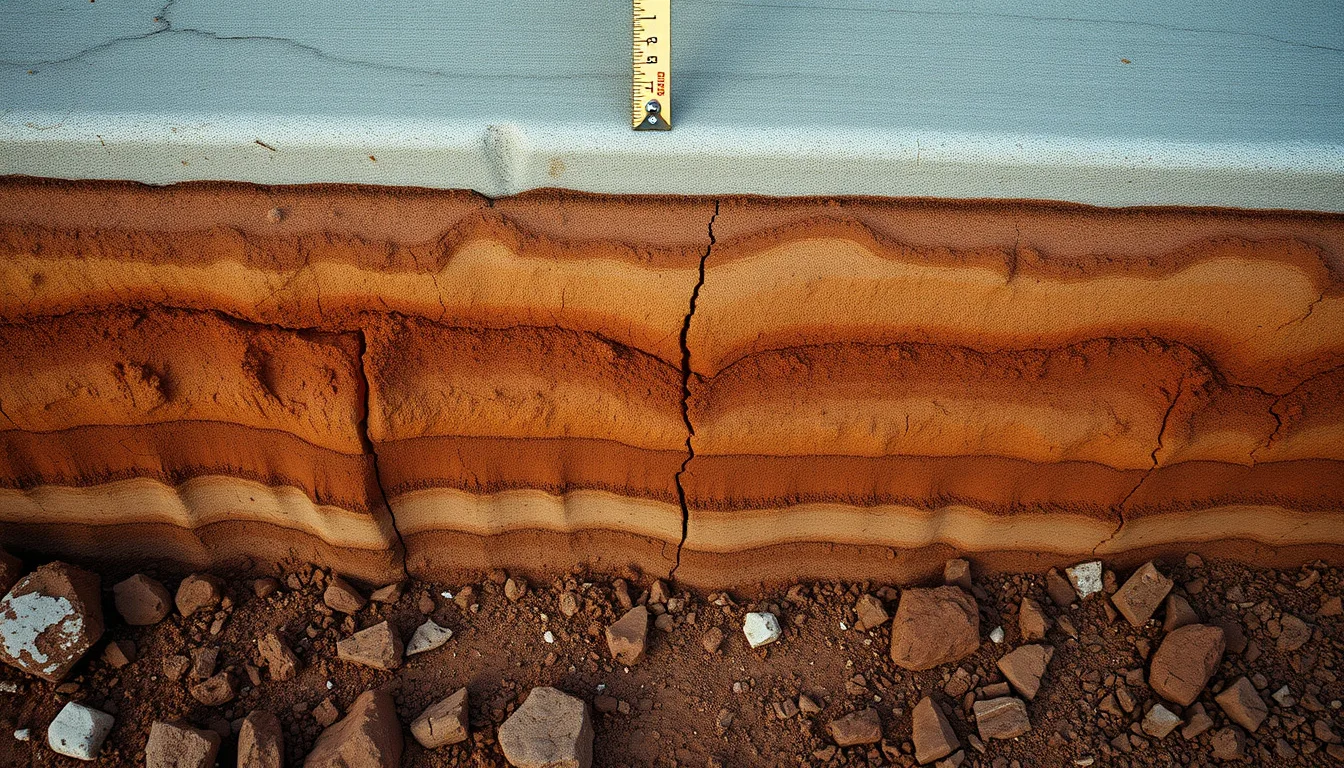
The dominant cause is expansive clay. Pierre Shale and bentonite-bearing claystone under the region swells dramatically when wet and shrinks when dry, with documented seasonal ground movement of roughly 2 to 6 inches in affected areas. That means slabs often heave up during wet seasons and leave a void underneath as the clay shrinks back down in dry seasons — a cyclical movement, not a one-time settlement.
Freeze-thaw frost heave adds a second, elevation-specific version of the same problem: water in the soil beneath a slab freezes, expands, and lifts the slab, then leaves it unevenly supported once it thaws. Because towns across this region — Colorado Springs, Manitou Springs, Cascade, Green Mountain Falls, Woodland Park, Divide, Cripple Creek — sit well above the Denver-metro baseline, thinner air and intense high-altitude sun drive more freeze-thaw crossings over a winter, conservatively more the higher a property sits. A honest lifting job here accounts for both clay movement and elevation-driven frost heave, not just one.
Mudjacking vs. Polyurethane Foam: A Direct Comparison
Mudjacking pumps a cement-and-soil slurry through 1- to 2-inch holes drilled in the slab and needs roughly one to three days to cure before the surface can be used again. Polyurethane foam injection uses an expanding, lightweight two-part foam through dime-sized holes — about 5/8 inch — and reaches usable strength in around 15 minutes.
The weight difference matters more here than in most places. Mudjacking slurry weighs over 100 pounds per cubic foot; polyurethane foam weighs roughly 2 pounds per cubic foot. On already-unstable expansive clay, pumping a heavy slurry underneath adds new load to soil that's already prone to swelling and shifting. Foam is inert, closed-cell, and waterproof once cured, so it doesn't break down, wash out, or add meaningful weight over time; mudjacking slurry is heavier and more erodible and commonly needs redoing within about 5 to 10 years.
- Mudjacking — 1–2" holes, 1–3 day cure, 100+ lb/cu ft slurry, typically needs redoing in 5–10 years
- Polyurethane foam — 5/8" holes, ~15 minute cure, roughly 2 lb/cu ft, waterproof and effectively permanent
Grade Preservation: Why Lifting a Sloped Slab Is a Different Job
A flat slab lift is a straightforward job: raise it until it's level. A graded driveway or terrace lift is a different problem, because the goal isn't flat — it's restoring the slab to the slope it was originally engineered with, so water keeps draining toward the intended low point or channel instead of pooling somewhere new.
This is where lifting the wrong section, or lifting evenly when only one corner has settled, can actually make drainage worse on the steep lots common throughout Manitou Springs, Cascade, and the Ute Pass corridor. We survey the existing and original slope before any injection begins, and we lift incrementally, checking grade as we go, so a driveway that's supposed to shed water toward the street still does — it just does it from a level, void-free base again.
Which Method Fits Your Situation
Polyurethane foam is generally the better fit on active expansive-soil sites specifically because its light weight won't reload soil that's already prone to swelling and shifting, and its waterproof, inert composition holds up better under elevation freeze-thaw cycling than an erodible cement slurry. It's usually the right call for driveways, patios, and walkways in known clay-heave areas, on steep grades where precise, incremental lifting matters, and anywhere a faster return to use matters.
Mudjacking remains a reasonable, lower-cost option on more stable ground, for larger-volume void fills where total material cost matters more than long-term stability, or as a budget-conscious choice when the property isn't sitting on active expansive clay. We quote both methods from an on-site inspection so you can compare total cost over the life of the repair, not just the upfront number.
What Lifting and Leveling Costs
Mudjacking typically runs about $3 to $6 per square foot; polyurethane foam runs $5 to $25 per square foot depending on void volume and lift complexity, but usually lasts far longer and requires fewer repeat visits. Actual pricing depends heavily on how much the slab has moved, how much void space needs filling, and whether the surface has meaningful grade that has to be preserved during the lift.
We inspect the slab, sound for voids, and give you a fixed price for both mudjacking and polyurethane foam before any drilling starts. Either method is dramatically cheaper than full slab replacement — lifting keeps the concrete you already own, including any decorative finish and its engineered slope, and puts it back where it belongs instead of hauling it off and pouring new material.
Drainage Correction: The Co-Fix That Makes the Lift Last
Expansive clay only swells when it gets wet. Lifting a slab back to grade without addressing what's wetting the soil underneath it is treating the symptom, not the cause — and on graded lots, uncorrected drainage does double duty, both feeding the clay and concentrating water at the same low point that caused the original settling.
Every lifting and leveling job includes a look at grading, downspout discharge, and irrigation near the affected slab, plus how a sloped surface is currently routing runoff. Where we spot a drainage issue feeding the problem — a downspout dumping at the top of a driveway, a terrace channel aimed at the wrong corner — we flag it as part of the same visit rather than leaving you to find it after the next wet spring.
Get a Lifting and Leveling Estimate
Send us photos of the uneven area and your town, or book a free on-site inspection anywhere across the Pikes Peak region. We measure the actual movement, sound for voids, check the intended grade, and quote both mudjacking and polyurethane foam so you can compare before any drilling starts.
Request a free estimate through our online form. If your driveway, patio, or garage slab also has cracking or scaling alongside the unevenness, we handle all of it in the same visit.
We lift and level concrete across Colorado Springs, Manitou Springs, Woodland Park, Cascade, Green Mountain Falls, Fountain, Monument, Palmer Lake, Divide, and Cripple Creek — all sitting on the same expansive clay belt, with elevation adding its own frost-heave pressure on top.
Lifting & Leveling FAQs
Straight answers before we drill
Mudjacking pumps a heavier cement-and-soil slurry through 1–2 inch holes and needs roughly 1–3 days to cure; polyurethane foam injection uses expanding lightweight foam through dime-sized (about 5/8 inch) holes and reaches usable strength in around 15 minutes. On expansive clay that's already unstable, foam's much lighter weight matters — it doesn't add significant new load to soil that's already moving.
Not if it's done correctly. We survey the original slope before any injection and lift incrementally, checking grade as we go, so a graded driveway or terrace goes back to its intended slope rather than to flat. Lifting a graded slab like a flat one is the mistake that actually creates new drainage problems.
Mudjacking typically runs about $3–$6 per square foot. Polyurethane foam runs roughly $5–$25 per square foot depending on void volume, but usually lasts far longer with fewer repeat visits. We quote both from an on-site inspection so you can compare total cost over time.
It can, if the underlying clay keeps swelling and shrinking seasonally, or if drainage feeding the soil under the slab was never corrected — which is why an honest repair here includes addressing grading and runoff alongside the lift itself. On the most active expansive-soil sites, some slabs may need a follow-up re-leveling after a severe wet-dry swing; we'll tell you upfront if your property looks like one of those cases.
Yes, in addition to clay movement. Because Pikes Peak region towns sit well above the Denver-metro baseline, thinner air and intense high-altitude sun drive more freeze-thaw crossings per winter, and frost heave from freezing soil water adds a second, elevation-specific way a slab can lift and then leave itself unevenly supported once it thaws.
Cracked, sunken, or salt-damaged concrete? Get a fixed price before we drill.
Free inspections across the Pikes Peak region. We diagnose high-elevation freeze-thaw, steep-grade drainage, and expansive-soil causes before recommending a repair.