Spalling & Scaling Repair — Colorado Springs to Cripple Creek
Concrete Spalling & Scaling Repair in the Pikes Peak Region — Fix De-Icer and Freeze-Thaw Damage Before It Reaches the Rebar
Flaking, pitted concrete on a mountain-corridor slab isn't cosmetic — it's chloride de-icers and elevation freeze-thaw working their way toward your rebar. We stop it at the surface before it becomes a structural spall.
Scaling vs. Spalling: Two Stages of the Same Problem
Scaling is the surface layer of concrete flaking or peeling away, usually a thin skin at a time, exposing the rougher aggregate underneath. It often shows up first as a light, powdery pitting on a driveway or walkway after a hard winter and looks worse than it structurally is — at this stage the slab is still sound.
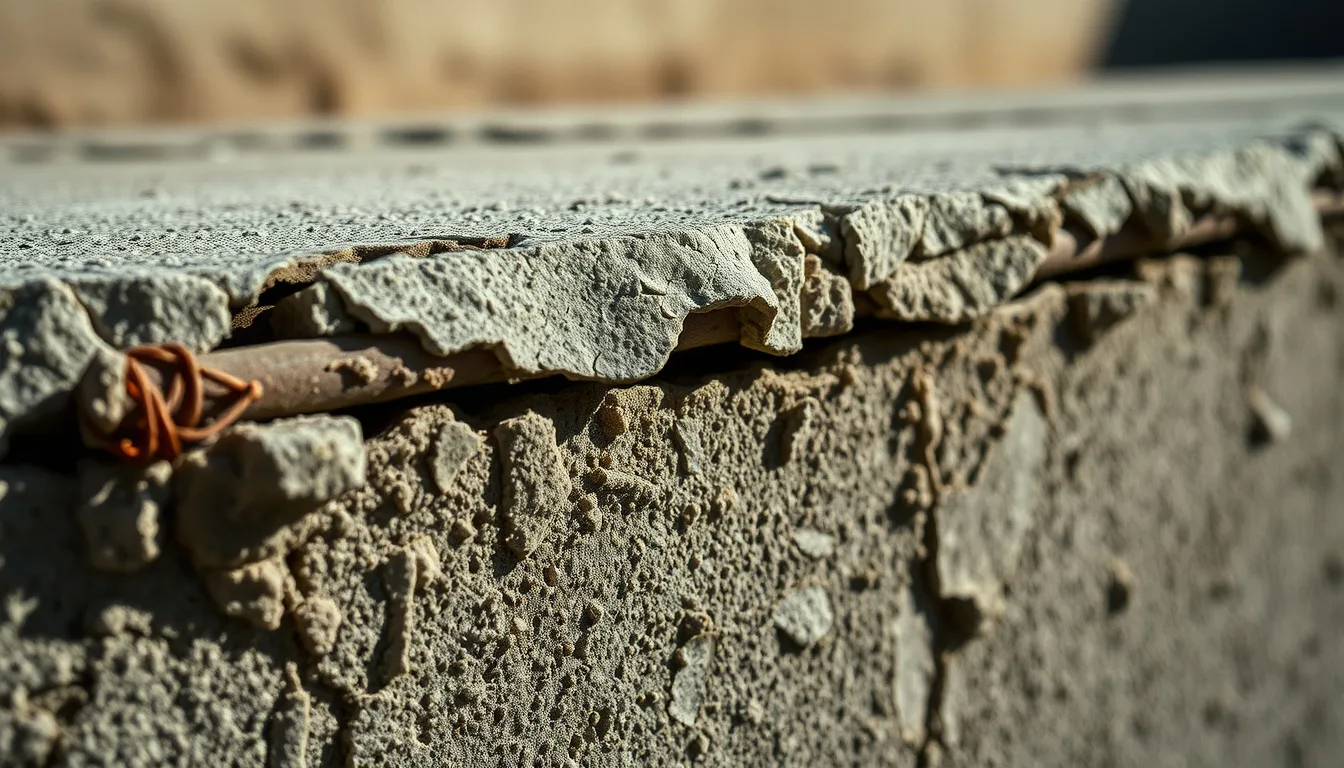
Spalling is the next stage: larger chunks of concrete breaking off, usually at edges, corners, or control joints, sometimes an inch or more deep. Where scaling is a surface problem, spalling means the damage has worked its way down to where the rebar typically sits.
Left alone, scaling reliably becomes spalling, and the pace of that progression is faster at elevation than at the Denver-metro baseline, because more freeze-thaw crossings mean more cycles of water expanding inside the concrete's pore structure each winter. A slab that's merely scaling today is a resurfacing job; the same slab a few winters later, once spalling has set in, is a patch-and-rebar job at meaningfully higher cost.
How De-Icing Chlorides Damage Concrete at Altitude
Colorado municipalities and CDOT rely on magnesium chloride and, less commonly, calcium chloride as the standard winter de-icers on roads, driveways, and sidewalks — different chemistry than plain rock salt. Both increase the amount of water held inside the concrete's pore structure, which intensifies the freeze-thaw expansion and contraction happening inside the slab and accelerates surface scaling.
The two chemicals are not equally damaging. Magnesium chloride causes measurably more surface deterioration than calcium chloride, and it's also far more corrosive to embedded steel — up to roughly 10 times more corrosive to mild rebar than calcium chloride in comparative testing. Calcium chloride is the gentler option by a wide margin.
Grades matter here in a way they don't on flat Front Range flatwork. Steeper driveways and mountain-corridor roads through towns like Cascade and Green Mountain Falls tend to get de-iced more heavily and more often than flat sections, simply because ice on a slope is a bigger safety concern — which means more chloride exposure concentrated on the steepest concrete surfaces on a property.
The elevation compounds it further. Because thinner air and intense high-altitude sun drive more freeze-thaw crossings per winter than the Denver-metro baseline, chloride-laden meltwater on Pikes Peak region concrete gets more freeze cycles to work with than the same de-icer application would see lower down — conservatively more scaling exposure, town by town, the higher the property sits.
Why Steep Grades Produce Patchy Scaling and Spalling
On a sloped driveway or walkway, damage rarely spreads evenly. Flatter mid-sections and low points hold meltwater longer, so that water sits and refreezes overnight rather than draining away — those spots take repeated freeze-thaw hits and scale first. Steeper sections shed water quickly and see comparatively less standing-moisture damage, even though they may get heavier de-icer application.
That's why we frequently see a driveway in Manitou Springs or along the Ute Pass corridor with scaling concentrated at one flat landing or a low transition point while the steep run above it still looks reasonably sound. Diagnosing the grade pattern, not just the visible damage, tells us where the next round of scaling is likely to show up next.
Why Untreated Scaling Turns Into Structural Spalling
Chloride ions from de-icing salt don't stop at the surface — they eventually penetrate to the embedded rebar and break down the passive oxide layer that normally protects it from corrosion. Once rebar starts rusting, it expands, because rust physically occupies more volume than the original steel. That expansion cracks and blows out the surrounding concrete from the inside, which is how a driveway that was merely scaling two winters ago ends up with chunks breaking off at a joint.
Rust staining bleeding out of a crack, or a hollow sound when you tap a section, are both signs the damage has already reached the steel and the repair scope has grown beyond a simple resurfacing.
Repair Methods by Severity
Surface scaling on a structurally sound slab is typically fixed with a bonded resurfacing overlay — a thin, high-strength topping that restores a uniform, sealed surface without removing the existing concrete. Early-stage, isolated spalling is fixed with chip-out-and-patch repair: the damaged concrete is cut back to solid material and rebuilt with a polymer-modified patching compound bonded to the sound slab underneath.
Where spalling has exposed corroded rebar, the repair has to address the steel — cleaning rust off the exposed bar, treating it with a corrosion inhibitor or protective coating, and in more severe cases splicing in new reinforcement before the patch is placed. Widespread spalling, or spalling that's undermined multiple joints, is usually the point where a bonded overlay across the whole surface is more cost-effective than patching each spot individually.
What Spalling and Scaling Repair Costs
Cost tracks severity closely. A minor surface patch on light scaling typically runs $20 to $50 per square foot. Spall repair involving cleaning and treating exposed rebar runs higher, often $50 to $150 per square foot depending on how much steel work is involved. A bonded resurfacing overlay across a full driveway or patio typically runs $30 to $80 per square foot depending on the extent of prep needed. In the rare case of deep, widespread spalling that has compromised large sections of a slab, full removal and recast may be the more cost-effective answer, sometimes running $150 to $400-plus per square foot.
We give an exact number after inspecting the extent and depth of the damage — scaling that looks bad on the surface is often a much smaller repair than spalling that looks minor but has already reached the rebar.
Free Spring Winter-Damage Inspection
Spring, right after the snow clears, is when the past winter's scaling and spalling becomes fully visible — and the right time to get ahead of it before another freeze-thaw season compounds the damage. We offer a free on-site inspection anywhere across the Pikes Peak region to assess how far the damage has progressed and give you a fixed repair price.
Request a free estimate through our online form. If the scaling has already progressed to spalling with exposed rebar, we'll tell you plainly what that repair involves before any work starts.
We work across Colorado Springs, Manitou Springs, Woodland Park, Cascade, Green Mountain Falls, Fountain, Monument, Palmer Lake, Divide, and Cripple Creek — every one of these towns sees the same chloride de-icer and elevation freeze-thaw combination driving this damage.
Spalling & Scaling Repair FAQs
Straight answers before we drill
Scaling is the surface layer flaking or peeling away to expose the rougher aggregate underneath; spalling is larger chunks of concrete breaking off, usually at edges, corners, or joints; cracking is an internal stress fracture reaching the surface. They're often stages of the same freeze-thaw and chloride-exposure damage progressing over time.
Magnesium chloride is the more damaging of the two — it produces measurably more surface scaling than an equivalent calcium chloride application and is far more corrosive to embedded rebar. If you control what's applied on your own property, calcium chloride or a sand-based traction product is gentler on concrete.
On sloped driveways and walkways common across the Pikes Peak region, flatter mid-sections and low points hold meltwater longer, so that water refreezes overnight and takes repeated freeze-thaw hits, while steeper sections shed water and comparatively less standing-moisture damage. Damage often concentrates at those low or flat transition points first.
Yes — towns across the Pikes Peak region sit well above the Denver-metro baseline, and thinner air at elevation changes temperature faster while intense high-altitude sun thaws ice on a slab even when the surrounding air stays below freezing. That produces more freeze-thaw crossings over a winter than the Denver baseline, conservatively, which means more cycles for chloride-laden meltwater to work into the concrete.
Yes — chloride ions from de-icing salt eventually penetrate to embedded rebar and break down the protective layer that normally prevents corrosion. Rusting steel expands and physically cracks and spalls the concrete around it from the inside, which is how surface scaling progresses into structural spalling if it isn't addressed.
Cracked, sunken, or salt-damaged concrete? Get a fixed price before we drill.
Free inspections across the Pikes Peak region. We diagnose high-elevation freeze-thaw, steep-grade drainage, and expansive-soil causes before recommending a repair.